April 21, 2026
In this post: What is Food System Circularity, Why the Linear Model Fails at Reducing Waste, How Divert Applies Circular Economy Principles to Reduce Food Waste, Removing Operational Friction, Turning Unconsumed Food Into Insights, Purpose-Built Processing for a Cleaner Circular Economy, Circular Outputs: Where Value Returns to the System
Summary: Reducing food waste requires more than landfill diversion—it demands a circular economy approach that recovers energy, nutrients, water, and insights from unsold food. This post explores what true food system circularity looks like, why the current linear model falls short, and how purpose-built infrastructure is closing the loop.
Today’s Food System is Linear. That’s a Problem.
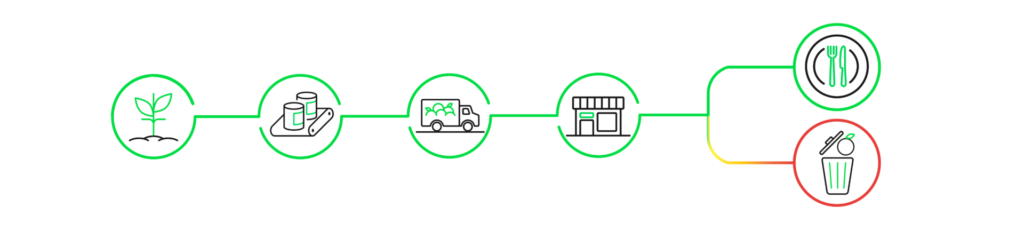
Right now, food is grown, cared for, harvested, processed, transported, marketed, and too often, wasted when it’s at its highest value. When that food ends up in a landfill, harmful methane emissions are released. Nutrients and water are unrecoverably lost as leachate. And the businesses that produced that food miss out on the visibility they need to reduce future waste by meaningfully addressing the problem at its source.
Sending food to the landfill is expensive too. Globally, the World Economic Forum estimates that the cost to manage food waste will top $540 billion in 2026. Without better visibility, the more food that ends up in the landfill, the more food that will end up in the landfill. It’s a cycle that needs breaking.
25% of food produced in the U.S. is wasted instead of eaten (ReFED, 2024)
At Divert, we believe there is a better way forward—one rooted in circular economy principles that respect the inherent value of food at every stage of its lifecycle and keep that value circulating within our communities. We call it food system circularity, and building it is central to our mission to prevent food from being wasted.
What Is Food System Circularity?
Food system circularity is a circular economy approach to reducing food waste that recovers the remaining value in unsold food and reintroduces it back into the food value chain. While all diversion methods redirect material away from landfills, few methods can capture the full value of that material. True circular food systems extract the nutrients, energy, water, and data for beneficial use.
To build a truly circular food system, diversion alone isn’t enough. We need a system that captures, measures, and returns value at every stage. Food is at its highest value when it’s ready to eat, and this is also where a significant portion of waste occurs. If we want a circular economy for food, solutions need to be embedded here.
In practice, food system circularity delivers four measurable outcomes:
- Data-driven waste reduction: leveraging insights to reduce future waste and increase donations
- Renewable energy generation: converting unsold, non-donatable food into renewable energy
- Nutrient recovery: producing nutrient-rich fertilizers to grow new food
- Water reclamation: rescuing and recycling the water bound up in food
When these outputs work together, food’s value is never fully lost. It’s transformed and preserved.

Divert’s platform intervenes where both value and waste potential are highest, reducing waste and recirculating resources into the food value chain
Why the Linear Model Fails at Reducing Food Waste
Today, most unsold food follows a linear path. It moves from production through the supply chain, reaches the point where it can no longer be consumed, and then—too often—goes straight to a landfill. When food follows this path, value is destroyed rather than recovered.
The environmental toll is well understood. Wasted food is a major contributor to landfill volume, and the methane it generates is a potent greenhouse gas. The economic implications are equally clear. In 2024, the value of food waste in the U.S. was estimated at a staggering $325 billion, according to ReFED. But the losses brought on by our linear food system extend further than emissions and economics.
When unsold food is landfilled, the energy stored in that organic material is gone. The nutrients that could enrich soil and support future growing seasons are lost. The water embedded in that food seeps away as contaminated leachate. And businesses lose visibility into why waste happened in the first place—making it nearly impossible to take meaningful steps toward reducing food waste at the source.
This isn’t just a system failure. It’s also a design failure. And it requires a fundamentally different, circular economy approach.
Bending the Curve: How Divert Applies Circular Economy Principles to Reduce Food Waste
Divert’s solutions are embedded where food is at its highest value but most at risk of being wasted. This positioning allows us to intervene and bend the curve—sending value back upstream and building a true circular food system.
At the heart of this approach is the Integrated Diversion & Energy Facility, purpose-built infrastructure designed for the inherent challenges that co-mingled commercial food waste presents at scale. Here’s how the process works—and why every step matters for the circular economy.
Removing Operational Friction
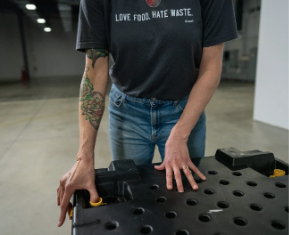
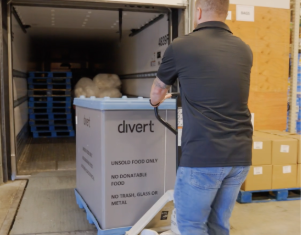
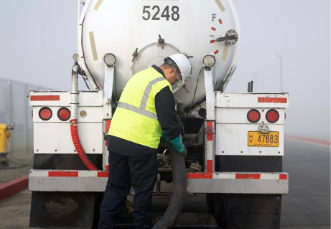
Circularity starts by removing friction from operations, making it easy for businesses to do the right thing with unsold food.
For retail grocers, unsold food arrives via Divert Relay—our patented and integrated reverse logistics model, engineered to reduce operational burden. Designed around Safe Quality Food standards (SQF) for a food-adjacent business, Divert Relay leverages purpose-built collection bins and existing transportation routes to move unsold food seamlessly and safely across large networks of customer locations, reducing operational stress and cutting down on transportation emissions.
For food manufacturers and distributors, Divert helps coordinate the most efficient and cost-effective transfer methods to our facilities, reducing logistical complexity so businesses can stay focused on what they do best.
Turning Unconsumed Food Into Insights
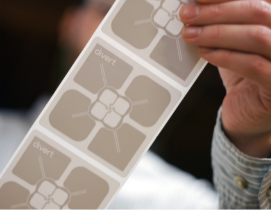

Layered on top of Divert’s infrastructure, the Divert Intelligence Platform provides unprecedented visibility into unsold food streams. This is one of the most important elements of reducing food waste within a circular economy framework.
When unsold food goes to a landfill or to a processor that doesn’t capture data, valuable insights disappear into a black box. Businesses know material has left their facility, but they don’t have the insights needed to understand how to prevent it from happening again.
The Divert Intelligence Platform changes that equation. By capturing data at the point of diversion, the platform reveals site-specific insights that can help customers improve their operations, reduce waste, and increase donations over time. Data captured in the platform drives Divert’s reporting and documentation capabilities, giving businesses the tools they need to make smarter decisions about production and inventory, and take measurable steps toward reducing food waste and complying with emerging organics diversion legislation.
Purpose-Built Processing for a Cleaner Circular Economy
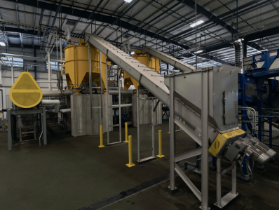
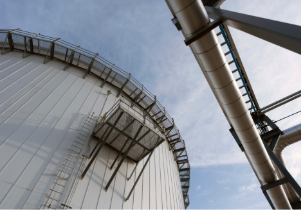
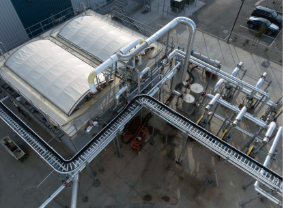
How unsold food is processed matters enormously for the quality of circular economy outputs.
Depackaging is the first big processing step, but not all depackaging methods are created equal. Turnkey depackaging systems can crush and co-mingle packaging and organics, and don’t employ liquid filtering methods. These systems have come under increased scrutiny for packaging contamination in their outputs, spurring some states to advance stricter purity requirements.
Divert designed its High-Recovery Depackaging system to gently separate these two streams, maximizing the recovery of valuable organics. Recovered organics are fed through a high-tolerance liquid filtering system, where fine mesh filters remove non-organics, like packaging. This is a deliberate investment—one that others in the industry have not made—and it has significant implications for the integrity of a circular food system. Divert is setting a new standard for downstream purity by eliminating microplastics from land-applied soil amendments and fertilizers derived from food materials.
A cleaner organics stream is not only better for our soils, it’s also more efficient for anaerobic digestion and water recovery.
Depackaged organics are pumped into the anaerobic digester as a slurry. The better the organics recovery rate in the depackaging step, the more value that can be recaptured in the digester. Bacteria in the digester naturally break down the organics into biogas and solids called digestate. The biogas is captured, purified, and upgraded to pipeline-grade renewable natural gas. Depackaging in a wet process also ensures that more food-bound water makes it into the digester, allowing it to be reclaimed after digestion has occurred. Water is sent through advanced membrane bioreactor filtering so that it can be recycled. And the remaining solids and nutrients are processed into fertilizers to enrich local soils and grow new food.
Circular Outputs: Where Value Returns to the System
This is where the circular economy comes to life—and where Divert’s approach to reducing food waste produces four interconnected outputs that go beyond what conventional diversion provides:
- Insights and reporting to drive continuous improvement and ongoing waste reduction
- Renewable natural gas to power homes and businesses, offsetting fossil fuel demand
- Fertilizers to enrich soil and grow new food, closing the nutrient loop
- Recovered water to reduce resource waste and support local water infrastructure
Together, these outputs form a complete circular economy system—not isolated benefits, but a continuous loop of value recovery. Focusing on just one output misses the point. True food system circularity is the combination of all four working together.
If unsold food does not move through this type of purpose-built circular system, its total value—energy, nutrients, water, and the visibility needed to reduce future food waste—is not being recaptured.
| Landfill | Composting | Divert | |
| Data-driven waste reduction | No | No | Yes |
| Renewable energy generation | Sometimes | No | Yes |
| Nutrient recovery | No | Yes | Yes |
| Water reclamation | No | No | Yes |
Leading the Circular Economy for Food
Today’s standard is clear: Food waste does not belong in a landfill. Emerging legislation is making that standard a reality. But what will tomorrow’s standard be?
The industry’s trajectory is towards a more circular food system, and Divert is leading the way.
From depackaging technology that better supports soil stewardship and enables compliance with EPR regulations, to processing methods that respect the unrealized value of food, Divert’s forward-thinking approach helps our customers be better prepared for the requirements of tomorrow. Every element of our approach is designed to close the loop on a food system that has been linear for too long.
This scalable model is paving the way forward to a true nationwide circular food system—one built on the principle that reducing food waste and recovering its value are interconnected steps towards creating a waste-free future for all.